Introduction: Why Most Copywriting Fails to Convert
You’ve probably seen it before.
A website looks professional. The design is clean. The product is solid. But something is missing… it doesn’t convince you to buy.
That’s the difference between average writing and high-performing copywriting.
Most businesses don’t struggle because of weak offers—they struggle because they don’t understand how persuasive copy actually works in real-world examples.
If you’re searching for copywriting examples, this guide breaks down real patterns, proven techniques, and the psychology behind high-converting messaging.
What Are Copywriting Examples?
Copywriting examples are real or modeled samples of persuasive writing used in:
- Landing pages
- Advertisements
- Email campaigns
- Sales pages
- Product descriptions
- Social media ads
They show how words are structured to:
- Grab attention
- Build trust
- Create emotional interest
- Drive action
1. Landing Page Copywriting Example
Weak Example:
“We provide digital marketing services for businesses.”
High-Converting Example:
“Struggling to get consistent leads? We help businesses turn traffic into paying customers using proven SEO and conversion strategies.”
Why it works:
- Speaks directly to pain points
- Focuses on outcome, not service
- Creates emotional relevance
2. Email Copywriting Example
Weak Example:
“Check out our new service.”
High-Converting Example:
“Your website is getting traffic—but no sales. Here’s what’s missing.”
Why it works:
- Strong hook
- Identifies a problem instantly
- Builds curiosity
3. Product Description Copywriting Example
Weak Example:
“This is a high-quality laptop bag made from durable material.”
High-Converting Example:
“Carry your laptop with confidence—this premium bag protects your device from daily wear while keeping your style sharp and professional.”
Why it works:
- Sells benefits, not features
- Creates emotional visualization
- Focuses on lifestyle impact
4. Social Media Ad Copy Example
Weak Example:
“Buy our SEO service now.”
High-Converting Example:
“Still not ranking on Google? Your competitors are getting your traffic every day. Let’s fix that.”
Why it works:
- Uses urgency and fear of loss
- Highlights competition
- Speaks directly to frustration
5. Sales Page Copy Example
Weak Example:
“We offer professional copywriting services.”
High-Converting Example:
“Turn your website into a 24/7 sales machine with conversion-focused copywriting that actually sells your services.”
Why it works:
- Outcome-driven messaging
- Strong emotional appeal
- Clear transformation promise
Key Patterns Behind High-Converting Copywriting Examples
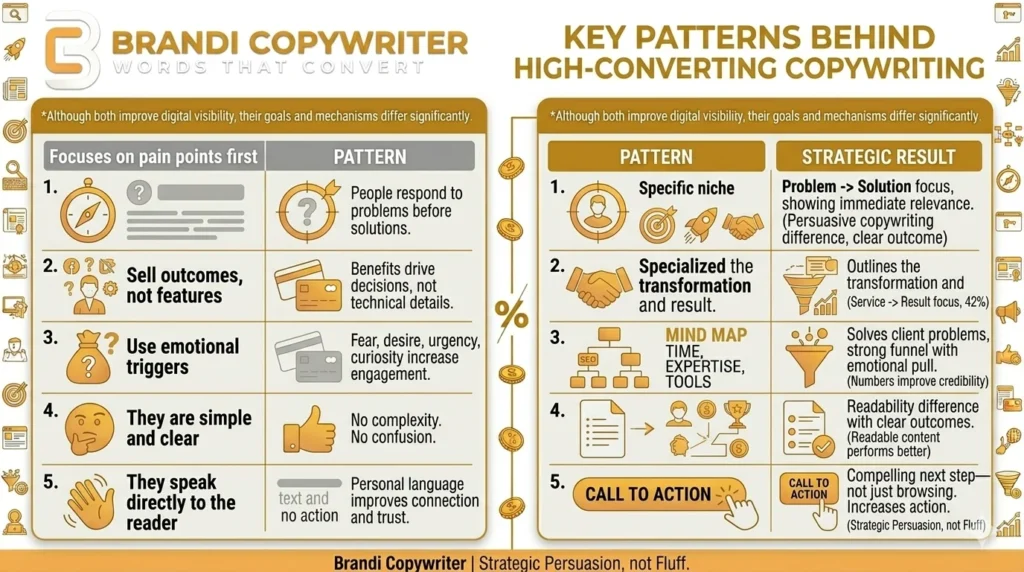
Across all successful examples, you’ll notice these patterns:
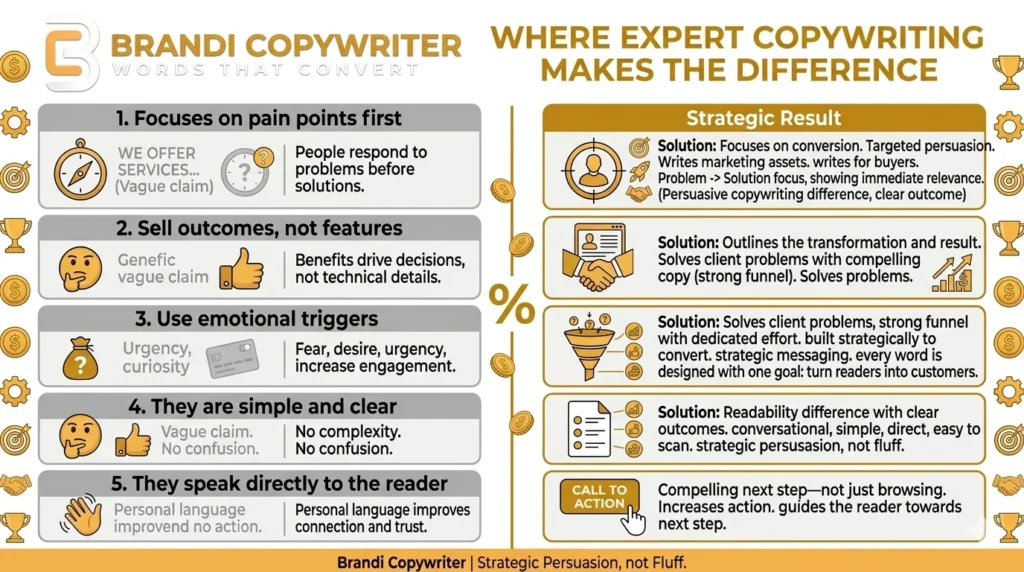
1. They focus on pain points first
People respond to problems before solutions.
2. They sell outcomes, not features
Benefits drive decisions, not technical details.
3. They use emotional triggers
Fear, desire, urgency, and curiosity increase engagement.
4. They are simple and clear
No complexity. No confusion.
5. They speak directly to the reader
Personal language improves connection and trust.
Why Copywriting Examples Matter for Your Business
Understanding examples is not just theory—it’s strategy.
They help you:
- Improve conversion rates
- Write better landing pages
- Increase ad performance
- Build stronger brand messaging
- Generate more leads and sales
But applying them correctly requires skill, psychology, and experience.
Where Expert Copywriting Makes the Difference
Most businesses know what good copy looks like—but struggle to create it.
That’s where professional expertise becomes essential.
At Brandi Copywriter, copy isn’t written randomly—it’s engineered for performance.
With 12+ years of experience in conversion-focused writing and SEO strategy, Brandi creates:
- High-converting landing page copy
- Sales-driven website content
- SEO-optimized brand messaging
- Email sequences that convert
- Lead-generating content assets
Every word is designed with one goal: turn readers into customers.
Conclusion: Great Copy Is Built, Not Guesswork
Copywriting examples aren’t just inspiration—they are blueprints for conversion.
When you understand how high-performing copy is structured, you stop writing randomly and start writing strategically.
But if you want consistent results, professional copywriting is not optional—it’s a competitive advantage.