
Introduction: Why Most Businesses Confuse Strategy With Execution
Many businesses believe they are doing content marketing.
They publish blogs, post on social media, and share updates regularly.
But despite all that effort…
Traffic stays low. Engagement drops. Conversions don’t happen.
The problem?
They are focusing on content marketing without a clear content strategy.
Understanding the difference between content strategy vs content marketing is essential if you want your content to actually drive results—not just exist online.
This guide will break down the key differences, explain how they work together, and show you how to use both to grow your business.

What Is Content Strategy?
Content strategy is the planning, research, and structure behind your content.
It defines:
- What content you create
- Why you create it
- Who you create it for
- How it supports your business goals
Key elements of content strategy:
- Audience research
- Keyword research
- Content planning
- Topic clusters
- SEO structure
- Content calendar
Content strategy answers:
“What should we create and why?”
What Is Content Marketing?
Content marketing is the execution and promotion of content.
It involves:
- Publishing blog posts
- Posting on social media
- Running email campaigns
- Promoting content through ads
Content marketing answers:
“How do we distribute and promote content?”
Content Strategy vs Content Marketing: Key Differences
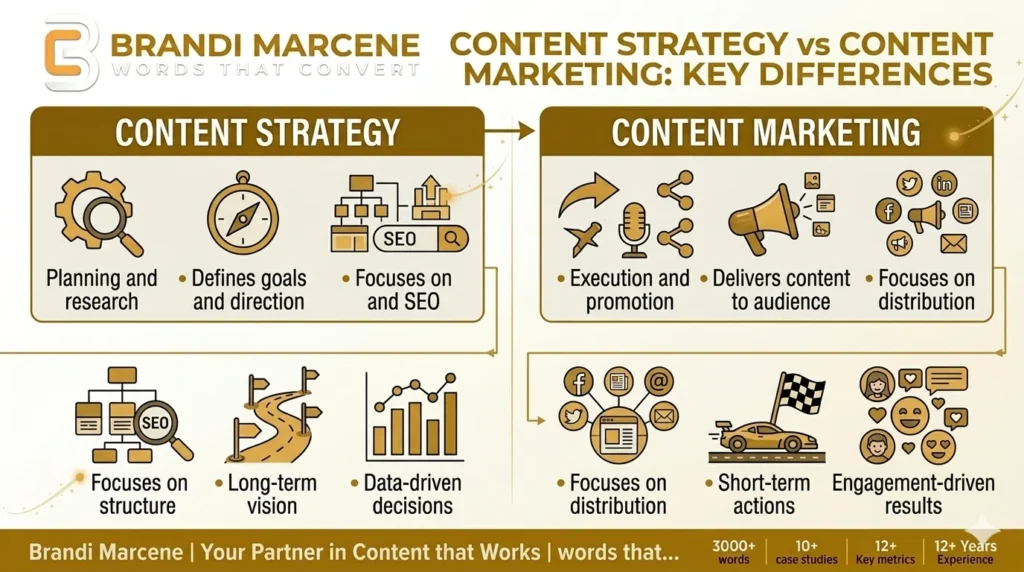
| Content Strategy | Content Marketing |
| Planning and research | Execution and promotion |
| Defines goals and direction | Delivers content to audience |
| Focuses on structure and SEO | Focuses on distribution channels |
| Long-term vision | Short-term actions |
| Data-driven decisions | Engagement-driven results |
In simple terms:
Content strategy is the blueprint. Content marketing is the action.
Why Content Strategy Comes First
Without a strategy, content marketing becomes random.
Common issues without strategy:
- Publishing content without direction
- Targeting the wrong keywords
- No clear audience focus
- Poor SEO performance
- Low conversions
A strong content strategy ensures that every piece of content has a purpose.
How Content Strategy and Content Marketing Work Together
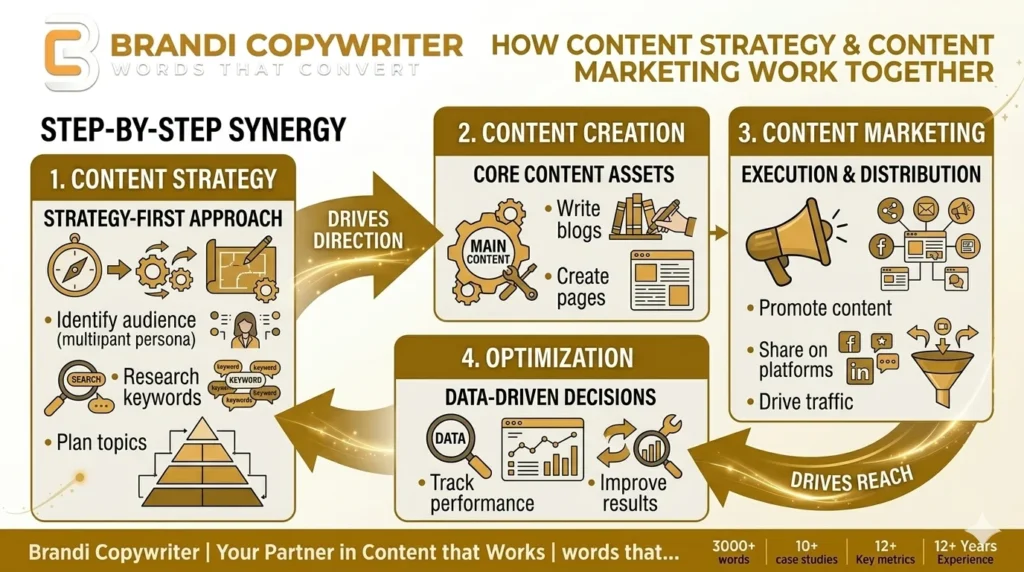
These two are not competitors—they are partners.
Step-by-step process:
- Content Strategy
- Identify audience
- Research keywords
- Plan topics
- Content Creation
- Write blogs
- Create pages
- Content Marketing
- Promote content
- Share on platforms
- Drive traffic
- Optimization
- Track performance
- Improve results
Strategy drives direction. Marketing drives reach.
Examples to Understand the Difference
Example 1: SEO Blog
Content Strategy:
- Keyword: content strategy vs content marketing
- Target audience: business owners
- Goal: organic traffic + leads
Content Marketing:
- Publish blog
- Share on LinkedIn
- Promote via email
Example 2: Service Page
Content Strategy:
- Target keyword: website content writing services
- Goal: conversions
Content Marketing:
- Run Google Ads
- Share in email campaigns
Why Businesses Fail Without a Content Strategy
Most businesses skip strategy because they want quick results.
But this leads to:
- Inconsistent content
- Low SEO rankings
- Poor engagement
- Wasted marketing budget
Content marketing without strategy is like advertising without a plan.
How a Strong Content Strategy Improves Marketing Results
When strategy is in place:
- Content ranks higher on Google
- Traffic becomes targeted
- Engagement improves
- Conversions increase
Every piece of content works together as part of a system.
SEO Benefits of Content Strategy
A strong content strategy helps with:
- Keyword targeting
- Internal linking
- Topic authority
- Content structure
- Search intent alignment
This leads to long-term organic growth.
Where Professional Expertise Makes the Difference
Understanding the difference is one thing—implementing it effectively is another.
At Brandi Marcene, content is not created randomly.
It is built using a strategy-first approach that combines:
- SEO content planning
- Keyword research
- Conversion-focused writing
- Content marketing integration
With 12+ years of experience, Brandi helps businesses:
- Build scalable content systems
- Rank for competitive keywords
- Generate consistent leads
- Turn content into revenue
If your content is not delivering results, the issue is not effort—it’s strategy.
Content Strategy vs Content Marketing: Which One Do You Need?
The answer is simple:
You need both.
- Strategy gives direction
- Marketing gives visibility
Without strategy → no results
Without marketing → no reach
Together → growth
Conclusion: Strategy Turns Content Into Results
Content alone does not grow a business.
Strategy does.
When you understand the difference between content strategy vs content marketing, you stop creating random content and start building a system that delivers:
- Traffic
- Engagement
- Conversions
The businesses that win online are not the ones creating more content—they are the ones creating smarter content.